Shared Working Directories Across Parallel Agent Instances
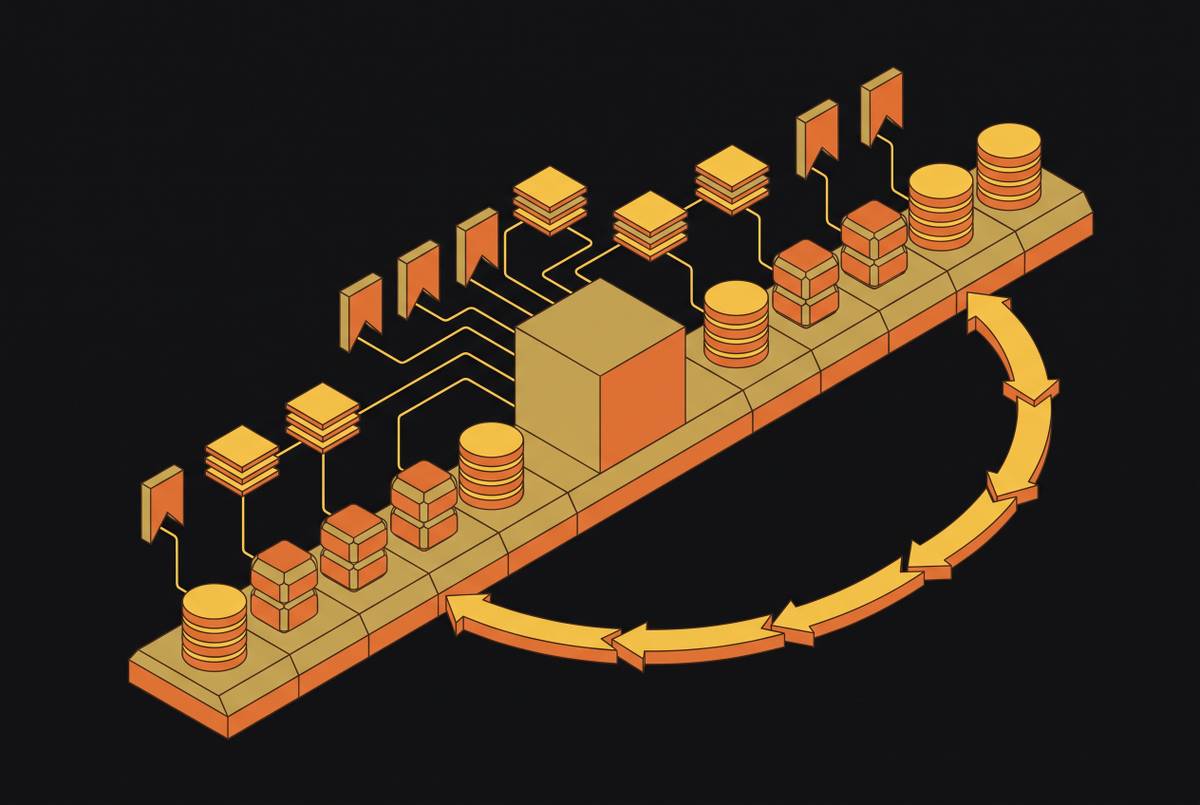
Worktrees isolate parallel agents and surface conflicts at merge time instead of silently.
Shared working directories are where parallel AI agent setups quietly fall apart. The fix isn't more agents or faster models, it's explicit strategies for task partitioning, isolation, and conflict resolution for shared working directories. Shared Working Directories Across Parallel Agent Instances.
Why shared working directories break under parallel agents
Parallelism is one of the three big execution patterns agent builders lean on going into 2026, and when it breaks, the agents usually aren't the problem Fast.io. The filesystem that supports them causes Fast.io.
The mechanic works like this. Two agents share a folder. Each reads the same file. Both edit it independently, based on what they saw at the moment they opened it. Both write back. The second write wins, and the first agent's work just vanishes, no error, no warning, nothing. Call that failure mode one: the silent overwrite.
Failure mode two is context contamination. One agent's uncommitted changes sit in the shared directory, and the other agent reads that half-finished state as if it were settled truth. Its decisions from that point on are built on sand.
Failure mode three: git lock contention Fast.io. Two agents try to run git operations at once, both hit .git/index.lock, and one of them throws a fatal error it usually can't recover from on its own. Progress freezes until a person walks over and deletes the stale lock file by hand. Which is a strange place to land in 2026: agents smart enough to write production code, stuck because of a lock file only a human can clear Fast.io.
Four concrete failure modes occur when agents share a working directory.
The real danger is that agents don't stop and raise a hand when something's wrong. They keep going, confidently, on data that's already been corrupted, and the damage stays invisible until a merge happens or a test suite runs and everything lights up red at once.
Collisions aren't randomly distributed either. They pile up around hotspot files: routing tables, shared configs, component registries, the files that half the codebase touches by nature. Any parallel task list of real size is going to route multiple agents through those same files, not as a fluke, but as the predictable outcome of how the codebase is shaped.
The nastiest version of this is semantic contradiction. Two agents each write code that looks completely reasonable on its own, passes the linter, compiles clean. Put them together and the logic disagrees with itself at runtime. Nothing catches that automatically, and by the time someone's tracing the bug back through two or three agents' parallel histories, the debugging session has become its own small archaeology project.
How task decomposition determines parallel safety
Most of this traces back to how the work got split up before a single file gets touched. If the tasks weren't given clean, non-overlapping boundaries around files and interfaces, no amount of clever infrastructure downstream is going to save the run.
Split work by domain, not by file type. Agents that each own a domain (billing, auth, search) rarely need to touch the same files. Agents split by layer (all the frontend work goes to one, all the backend to another) are going to collide constantly on shared utilities, because both of them need the same plumbing.
Good decomposition works off a spec: something that holds the long-horizon intent for the whole project, broken into individual tasks small enough that one agent can hold the relevant context without dragging in half the repo it doesn't need.
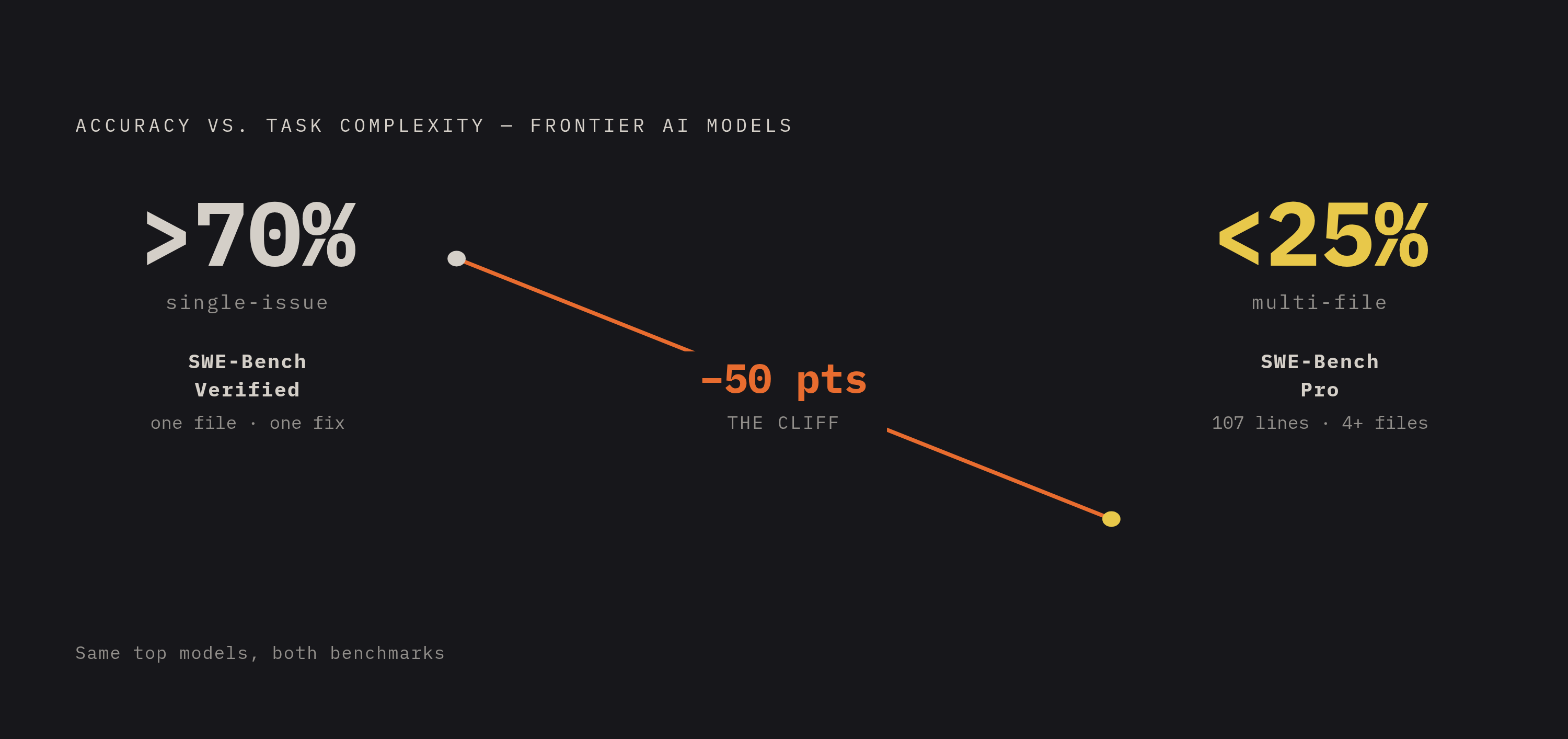
And the accuracy numbers back this up hard. Frontier models score above 70% on single-issue tasks in SWE-Bench Verified Augment Code. Hand those same models a SWE-Bench Pro task, patches averaging 107 lines spread across four or more files, and the best of them drop below 25%, a cliff rather than a small dip Augment Code. Keeping tasks small is necessary for reliable execution, not just for tidy coordination. It's the difference between working in the zone where these models are actually reliable and working in the zone where they're basically guessing with good grammar.
Three patterns cover most of the parallel setups that make sense to run. Fan-out/fan-in sends the same task to several agents at once and synthesizes the results, good for research or anything where you want multiple angles on one question. Pipeline with parallel stages moves items through a sequence of steps, with different items sitting at different stages at the same time, suited to content or data pipelines where each item doesn't depend on the others. Competitive execution runs multiple agents at the identical task and keeps the best output, which only pays for itself when the spread in output quality is wide enough to justify burning the extra compute.
And before any of that gets assigned: find the hotspot files first. Routing tables, shared configs, registries. Give each one a single owner, or route changes to it through one controlled merge step. Two agents should never be reaching for the same config file at the same time, full stop.
Context exhaustion is really a decomposition failure wearing a different name. Once a task's scope creeps past a single subsystem, the agent burns more and more of its context budget just loading files it doesn't actually need, and that drag compounds into drift and mistakes.
Git worktrees as the primary isolation mechanism for parallel coding agents
The tool that solves file collisions has been sitting inside Git since version 2.5. It's called a worktree, and it lets a single repository check out multiple branches into separate directories on disk, all at the same time.
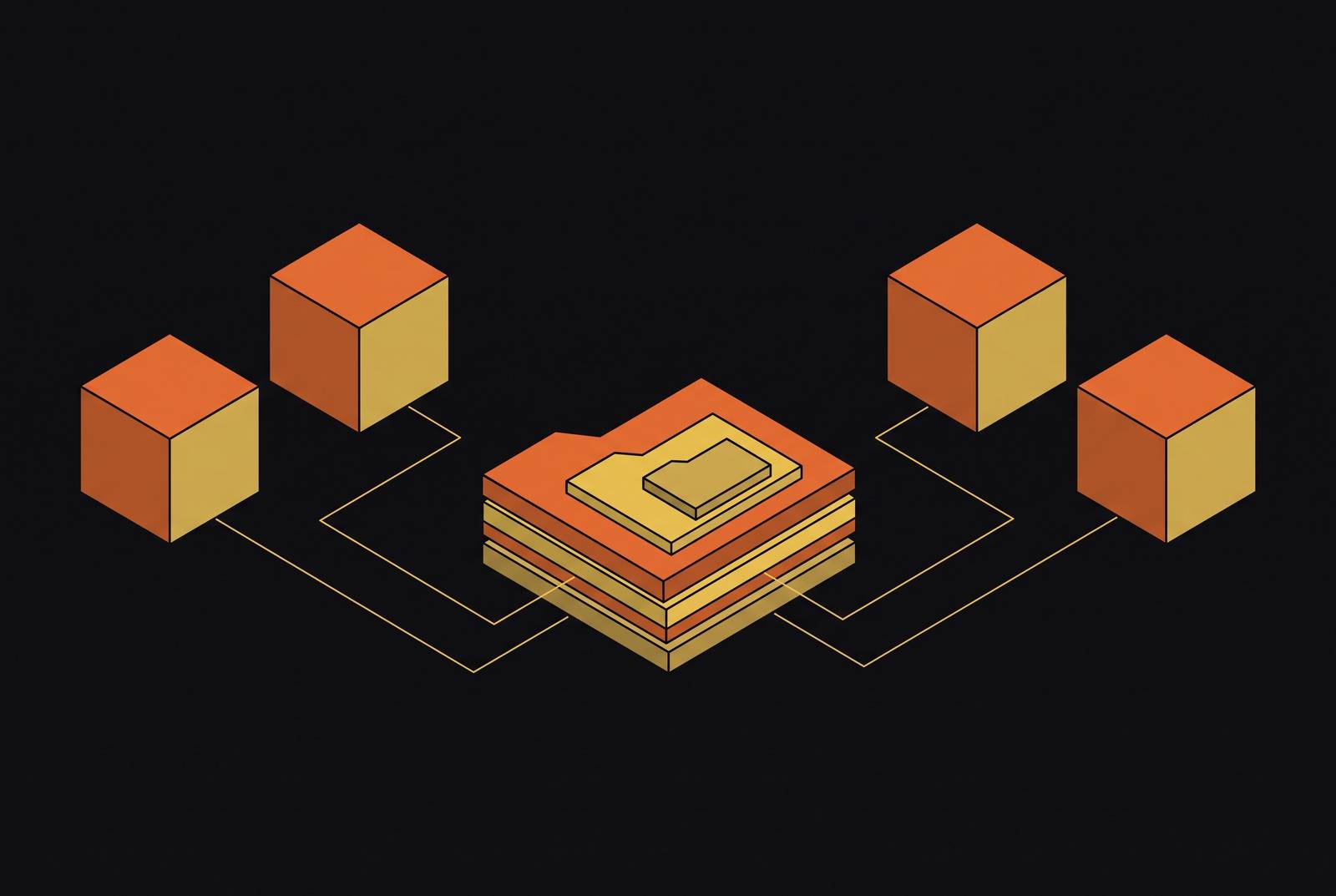
Each worktree gets its own checked-out branch and its own working state. An agent working in one directory has no physical way to reach into another. It's less like giving agents separate desks in the same room and more like giving each one its own office with a locked door. The building's the same, the walls aren't.
Underneath, they all still share the same .git object store, so there's no duplicate history sitting around eating disk space, and every worktree can see the same commit log. The conflicts don't disappear, they just move to a better spot: instead of causing a silent overwrite mid-task, they appear at merge time, where git's own tooling compares each branch against a common ancestor and shows where two changes actually clash.
Setting one up is a few lines. git worktree add -b feat/auth ../project-feat-auth main creates a new directory, a new branch, and checks it out in one move. Repeat that per agent, run git worktree list to sanity-check which directory maps to which branch and commit. Launch the agent from inside its own worktree directory, and tools like Claude Code or Cursor just see that worktree's state, nothing else. Once the work's done, merge the branch and run git worktree remove, because worktrees don't clean up after themselves. Left alone, they pile up like takeout containers in a fridge.
VS Code added worktree support in July 2025, JetBrains IDEs shipped first-class support in the 2026.1 release in March 2026, and Claude Code's official docs document the worktree-per-agent pattern explicitly, with the common workflows page listing it and a dedicated worktrees page covering it in full Fast.io. Cursor's May 2026 changelog added a quick action that splits a set of changes into logical PRs and proposes the split for approval Fast.io. None of that changes what a worktree is. It just means the tooling stopped treating it like a power-user trick and started treating it like the default.
How far does this scale in practice? One practitioner has reportedly run a setup with 371 worktrees going at once, which is anecdotal rather than something to build a standard around, but it's a useful data point that the pattern holds up well past small team sizes Augment Code. And the mechanism doesn't care what's running inside it: it's plain git, so the agent in the directory doesn't need to know or care that it's sitting in a worktree.
What worktrees fail to isolate
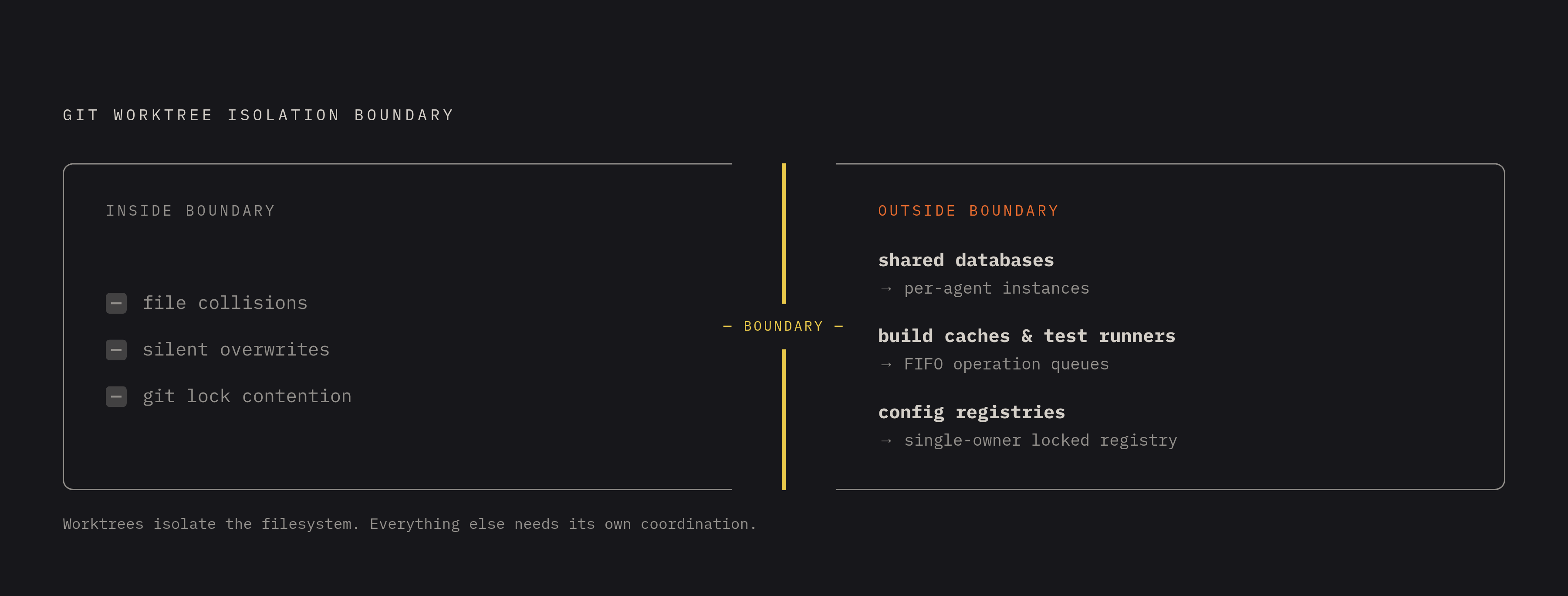
Worktrees solve file collisions. They don't solve everything, and pretending they do is how teams get burned right after they thought they'd fixed it. All worktrees under one repo still share the same local database, the same Docker daemon, the same cache directories. Two agents hitting the same database at the same time still produces a race condition, worktree or no worktree.
Three categories of shared state fall outside what a worktree touches. Databases are the first. Fixing this means giving each agent its own instance rather than a shared one, a lightweight orchestrator spinning up isolated Postgres or SQLite per worktree, so nobody's writing over anybody else's rows.
Build caches and test runners are the second. If several agents each kick off something heavy, ./gradlew test, say, at the same time, the machine ends up thrashing and every agent slows down together. Block's open-source agent task queue handles this by routing expensive operations through a FIFO queue, so one job runs while the rest wait their turn instead of piling on all at once.
Configuration registries are the third, and arguably the sneakiest, because the failure looks like a filesystem bug when it's actually a coordination bug. A registry that gets read, modified, and written back under concurrent access from multiple agents can end up corrupted, with workspace entries silently lost or clobbered.
Any shared mutable state that lives outside the file boundary reproduces the exact race conditions worktrees were built to prevent, and this rule applies to all three Fast.io. The worktree draws a line around files. It draws no line at all around a database connection, a cache folder, or a registry entry. Treat databases as per-agent, expensive operations as queued, and registries as just another hotspot file, single-owner, locked during writes, updated only through the merge step.
File locking and message-queue coordination as complements to filesystem isolation
Below the worktree layer, there's still a need for fine-grained coordination on shared resources, and that's where locking earns its keep. Shared locks let multiple agents read at once but block writes. Exclusive locks hand one agent full read and write access and shut everyone else out. Advisory locks work fine for most agent setups, on the condition that every agent actually respects the protocol, which is the same social contract as a stop sign: it only works if everyone agrees to stop.
A few habits keep locking from becoming its own hazard. Keep lock duration short, under 5 minutes for high-concurrency systems Hammerspace. Always attach a TTL, so an agent that crashes mid-task doesn't leave its lock standing forever like an unpaid parking meter. Log every acquisition with the agent's ID, a timestamp, and the reason it grabbed the lock, so when something goes sideways there's an actual trail to follow. And route locks through one central lock manager instead of scattering file-level lock files everywhere, which just invites a new race condition: agents locking each other out of the locks themselves.
Locking has a ceiling, though. Once the fleet gets big enough, agents queued up waiting on the same resource turn contention into a throughput problem, not a safety one. That's where message-queue coordination takes over. Instead of agents grabbing and releasing locks on shared files, they publish and subscribe to events. Agent A finishes its research and publishes "research complete for topic X." Agent B, watching that channel, picks it up and starts writing. The files might still sit in shared storage, but the actual coordination happens through messages, not through fighting over locks.
That said, message queues aren't free. They mean standing up queue infrastructure and handling message ordering and delivery guarantees, which is real engineering overhead. For a team running two to four agents, that's overkill, the software equivalent of hiring a full-time air traffic controller for a driveway. Worktrees handle isolation. Locks handle fine-grained access within a session. Message queues earn their keep only once fleet size turns lock contention into an actual bottleneck.
Orchestrator, specialist, and verifier roles as the coordination layer above the filesystem
None of the filesystem tooling means much without a role structure sitting above it, and the setup that recurs in production multi-agent coding work splits into three jobs: coordinator, specialist, verifier Fast.io.
The coordinator reads the codebase, writes the spec, breaks it into a task list, and manages the order in which branches get merged. It's the one agent holding the long-horizon plan, the only one with the full picture. Specialists execute the individual scoped tasks, each inside its own isolated worktree, and report back with a summary. Each one runs in its own context window and has no automatic visibility into what any other specialist is doing mid-task, which is exactly the point. The verifier checks finished output against the spec before a merge is allowed to happen, and it's the one role built specifically to catch the semantic contradictions that pass compilation and linting without a flicker of concern.
Merging matters as much as any of the above. Merge every branch at once and the branches collide again one layer up, at the git level instead of the filesystem level. Merge sequentially, verifying after each one lands, and the coordinator gets to see the evolving state before deciding what the next branch walks into.
Not every task deserves the same model either. A one-line config tweak and a four-file refactor don't carry the same risk, so routing the harder, higher-stakes tasks to the more capable (and typically slower, pricier) model, while sending the simple stuff to something faster and cheaper, is a coordination call the orchestrator should be making on purpose, not by default.
And the spec is what keeps the whole thing honest. It's the only place holding intent that spans the entire project. Without it, each specialist makes a call that's locally reasonable and globally wrong, which is precisely how semantic contradictions get born. Tests plus automated checks are the evidence that gets a branch merged. Self-reporting is nice. It is not a quality gate.
Monorepo and large-repository performance considerations for worktree-based parallel agents
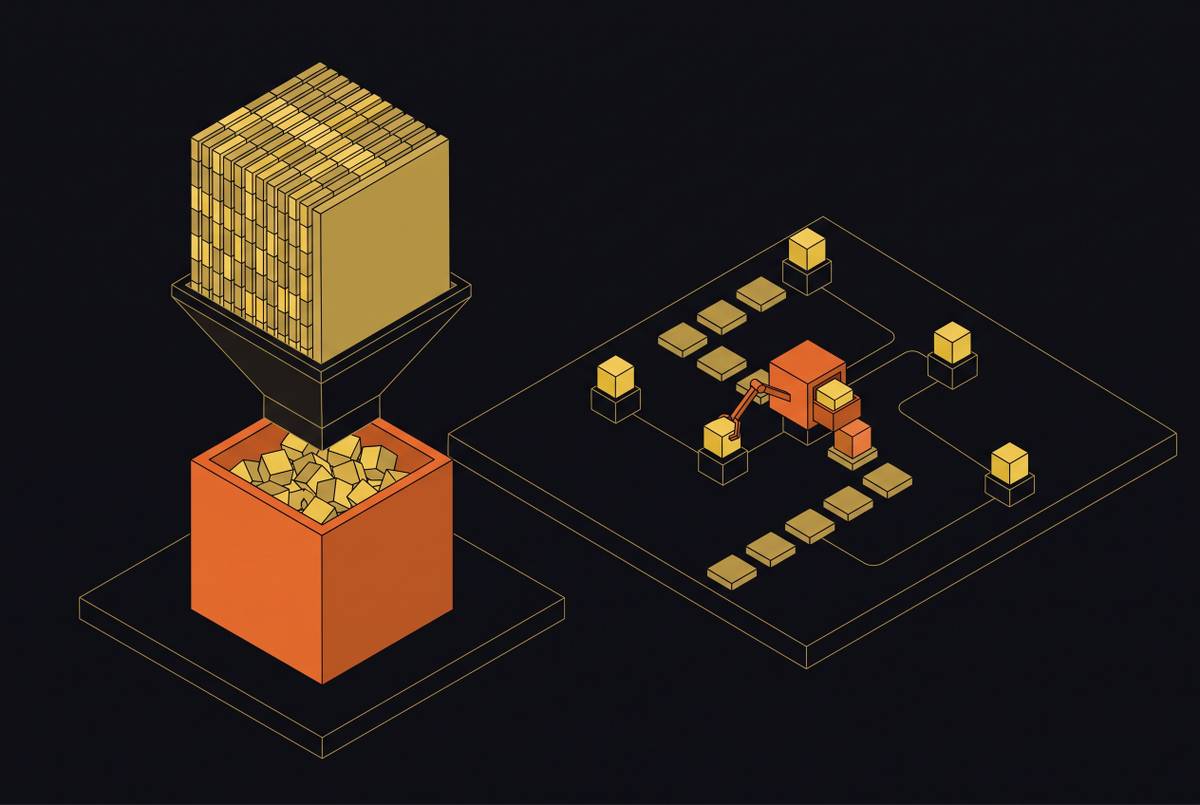
Worktrees are cheap on history, since they all share one object store, but each one still needs a full working directory checkout.
The fix is git sparse-checkout set <paths>, paired with the worktree itself, so each one only checks out the files its assigned task actually touches. Less of the repo on disk means less I/O, less for the file watcher to track, less overhead across the board, scaled down roughly in proportion to how much of the repo the task doesn't need.
It's the same problem occurring twice, once on disk and once in the agent's head. Sparse checkout trims what physically loads. Tight, spec-driven task scoping trims what the agent has to hold in its context window. Different layer, same fix: stop loading what isn't needed.
Cursor 2.5, shipped in February 2026, added async subagents that can spawn their own subagents, building out a tree of coordinated work rather than a flat list Fast.io. If every level of that tree spins up its own full worktree checkout, the disk and context pressure doesn't just add, it multiplies down the tree, which matters most for monorepos.
None of this is free to manage by hand at scale. Creating a worktree, verifying it, merging it back, tearing it down again, that lifecycle needs to run on rails, automated rather than left to someone clicking through it manually. Otherwise the very coordination meant to save time starts eating the time it saved.
Shared storage for parallel training workers, a different class of the same problem
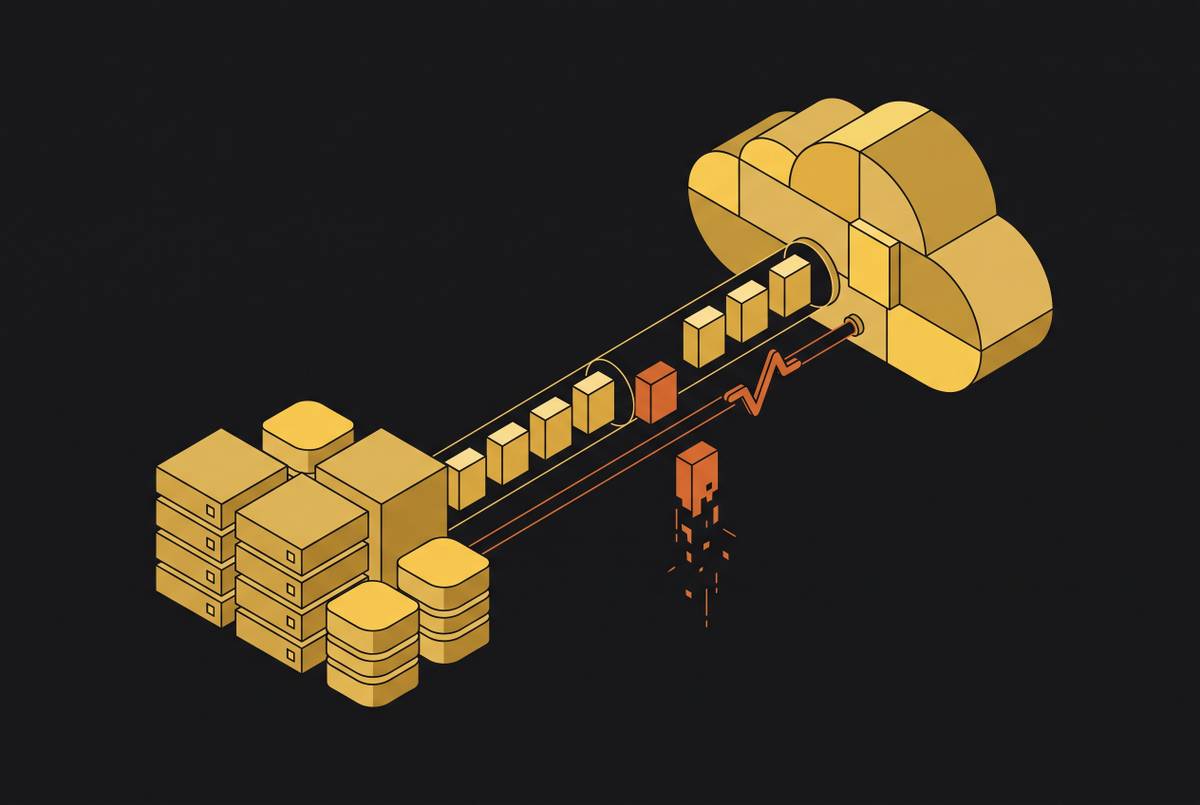
Training workers run into a version of this same fight, just at a scale that makes coding agents look quaint. Instead of agents editing files, it's distributed workers reading training data, writing checkpoints, and pulling intermediate artifacts, all against shared storage, all at once, with actual hardware throughput limits standing in the way.
Checkpointing is the workload that defines the whole problem. Miss that window regularly and the cluster spends more time saving its own progress than making any.
Where that checkpoint actually lands matters just as much as how fast it gets written, the same way worktree cleanup matters for coding agents: pick the wrong tier and the work is just gone. Hot storage, fast NVMe or a high-performance parallel filesystem, holds the active training data workers need right now. Warm storage holds validation sets, experiment logs, and recent checkpoints, the stuff you'll want again soon but not this second. Cold storage archives what's done being useful day-to-day but still needs to exist somewhere. Skip that structure, and the failure mode isn't a silent file overwrite anymore. Modern LLMs checkpoint every 500–2,000 training steps to preserve progress against hardware failures Hammerspace. Each checkpoint writes 350–500 GB of model state (optimizer states, gradients, model parameters) from distributed GPU memory to persistent storage Hammerspace. Checkpoints must complete in under 5 minutes to minimize training interruption, requiring burst write bandwidth of 1–2 GB/s per checkpoint Hammerspace.